

Weaponizing Clichés

Writers know that resorting to clichés devalues their work.
This is true for writers in every genre, whether painting a word picture or mounting an argument. As sure “as night follows day” (cliché), the argument and the reader’s attention will be lost.
Some clichés, particularly thought-terminating clichés, are used to shut down conversation or critical thought by offering simplistic, irrefutable phrases that discourage further discussion. These clichés can double as stereotypes if they reinforce broad assumptions about groups (race, gender, religion, politics etc.) reducing individuals to narrow traits and enabling or justifying social exclusion, unequal treatment, or violence.
It has to be said, however, that some people find the use of clichés and stereotypes absolutely essential to the expression of views that would otherwise be too complicated or weak to explain.
I thought of this when listening to the response of BBC acolytes to the criticism of the Beeb’s egregious bias, fraud and duplicity this week, to which they replied as one united voice that criticism was “a Far Right conspiracy”. By resorting to this shorthand they avoided the tedium of having to explain exactly what they meant.
What they meant was, “We don’t care what you think, we are right, you are wrong and nothing you can say or do will change our opinion that we are morally virtuous and above criticism, no matter what we do, while you are ignorant, morally abhorrent, and therefore unentitled to an opinion. So, piss off.”
What most people fail to recognize is that this is exactly what’s being said to them whenever they are being dismissed as “racist, transphobic, a climate denier, an anti-vaxxer, Islamophobic, and a Nazi”. You can be all of those things wrapped up in the one bundle called “Far Right”. For those who throw these cliched stereotypes at you, it beats having to stand their ground and mount convincing arguments around highly complicated issues, particularly when their views are reliant on feelings and their group’s consensus, rather than informed critical thinking.
I have to admit that I, too, have fallen into the habit of avoiding the tedium of mounting convincing arguments around highly complicated issues. I’ve fallen into the trap of concluding that searching for facts, applying critical thinking, and eliminating bias, will not help persuade people who suffer from the Beeb syndrome. I’ve even started using the phrase “the Far Left”. (God save me from my sins.)
How did we reach this point? For most of the 20th Century, and the early part of this Century, people in liberal democracies equated freedom with the ability to hold differing views and to freely express them. What changed?
Thinking about the strange delusional religion that is climate activism — which is displaying peak irrationality at COP30 in Brazil this week — I remembered what old Plato had to say. Actually, he didn’t say it but it is frequently attributed to him, “Give me the child until he is seven and I will give you the man.” What he did say was, “Education is teaching our children to desire the right things.” At some length in The Republic, he proposed that children should be raised collectively by the state, and even separated from their biological parents, to break down familial loyalties and cultivate the approved view and the pursuit of virtue.
If that sounds familiar, it’s because this pedagogical approach to education has heavily influenced schools and academies for decades. The “approved views”, and the definitions of “virtue” of educators inevitably shape those of the children and young adults they hold in their clutches for eight hours a day for ten to twenty years. This is what we’re up against when trying to understand the dogmatic beliefs of young people. In New Zealand we have “children’s marches” organised by teachers, in which pre-pubescents, who cannot yet read or write, parade down the main streets screaming abuse at people who are causing the oceans to rise and coral reefs to die (like the “frogs in boiling water” cliché), many in tears and doomed to teenage depression.
I won’t try and argue the cases for and against global warming because the amount of material written on this subject would dwarf the Library of Congress: the world’s largest library with 173 million catalogued items on 832 miles of bookshelves, excluding its digital files. (With such a resource available to them, it is amazing the level of ignorance of so many people in Washington DC.)
Instead, to quote another hoary old cliché, let’s “follow the money”.
This all started back in the 1970s when we were promised Acid Rain and the death of all forests (which didn’t happen), followed by the Nuclear Winter scare and a New Ice Age (another apocalyptic prediction that didn’t happen), all of which sprang out of the closeted minds of university researchers and academics looking for government funding. They really hit the jackpot, however, when they stumbled across CO2 as the future cause of potential catastrophe. This fitted the needs of globalists seeking a mechanism for imposing international controls and taxes and needing a virtuous-sounding cause that would not yield a clear-cut evidential test — preferably not even be resolvable — but which scientific opinion and official bodies would be incentivised to buy into.
Here we are today. Net Zero carbon reduction investment has become one of the largest and fastest-growing domains in public spending worldwide. Since the late 20th century, nations have responded with trillions of dollars in subsidies, incentives, and public investment. Developed countries have pledged to ramp up climate finance for developing nations to “at least US$300 billion annually”. The global annual cost of climate action for developing nations alone will reach US$5.5–US$7 trillion per year from 2023–2030, and there are over 400 legislated government incentive programs globally supporting renewable energies, electric vehicles, and decarbonization research, totaling many trillions of dollars.
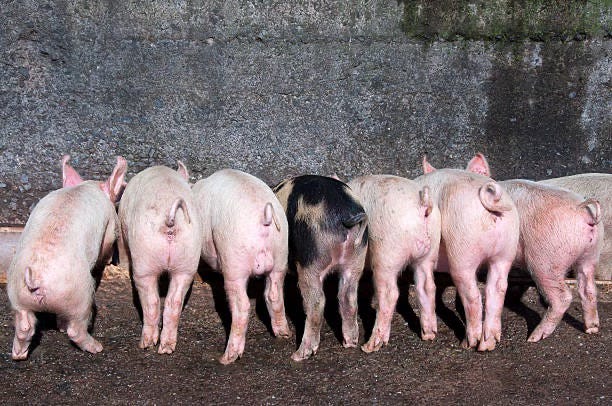
With so much money floating around you would expect savvy investors to come to the trough in numbers.
With so much money floating around you would expect savvy investors to come to the trough in numbers. Which brings us to Bill Gates. Billy Boy has reputedly invested US$2.2 billion of his personal money, and US$15 billion of corporate money into green climate ventures and technology since 2015. Which makes his recent blasphemous claim that global warming ain’t what he and others have been claiming it to be, shall we say, kinda interesting.
But, then again, not surprising. He’s sniffed the wind.
While 56,000 taxpayer-funded delegates have trooped off to Brazil for a week of earnest, but unproductive jaw-boning in the middle of the cleared spaces in the Amazonian forest, he’s noticed that the world’s three largest polluters — China (with 32%), the USA (with 13%), and India (with 8%) — have said “No thanks, we’re busy”. Countries are dropping Net Zero pledges like hot potatoes (cliché) while desperately looking for some other catastrophe they can reverse engineer.
Perhaps our best hope for predicting that new catastrophe will be to watch where Billy Boy’s money goes next.
Meanwhile the United Kingdom’s smothering of its green and pleasant land with solar panels is forecast to reduce food production by a third by 2030. How smart is that?
Little Ol’ New Zealand, responsible for just 0.17% of greenhouse emissions, mostly methane, is committing to spend NZS25 billion — to whom it isn’t clear — to offset the cost of its sins. Naturally, you’ll be able to find plenty of New Zealand delegates in Brazil this week, if you happen to be flying in.
To use another cliché, these taxpayer-funded bureaucrats never miss a chance to “feed at the trough”.
A.I. Fabler
November 16, 2025